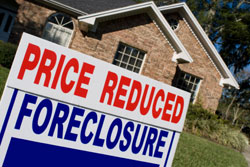
During the real estate boom, many investors got caught up in the mania of buying real estate. In 2005, people I knew were going into the real estate industry left and right. Many seemed surprised that I elected not to buy any property.
Whenever someone asked me why I didn’t own real estate, I would simply point out that no properties near me cash flowed. I first started blogging about real estate in 2003, noting that a property in the same condo complex where I was renting was actually more money to own than to rent. I pointed out, correctly, that this meant I could not possibly cash flow on it as a rental with a 30-year fixed mortgage. (Those condos have already lost value, as I predicted, and are poised to drop further.)
Even though many looked at me like I was crazy for “throwing my money away”, I continued to rent. In August 2006, I predicted the real estate crash year by year, and also predicted that I would buy a house in late 2010. So far, my predictions have been eerily accurate; I predicted that Fannie and Freddie would crash, housing values would drop by at least 35%, and saw the recession coming.
I spent hundreds of hours accumulating data, confident that the coming crash would represent one of the biggest opportunities to buy property in our lifetimes. Here, I take my accumulated knowledge and answer your five most common questions about buying real estate.
Even better, I am also giving you a free copy of my rental property income worksheet. Frankly, it’s so worthwhile I could probably sell it, but I’m happy to give it away to you, my loyal reader. The worksheet allows you to plug in a few numbers and see quickly whether any property cash flows. You can download it after reading this post.
1: When is it a good time to invest in real estate?
The simple answer is “When you can get the lowest price to rent ratio for the property you are buying.” Here’s how to find the ratio:
Find a comparable rental (craigslist is good for single-family home rentals.) Find the purchase price of your property. Take the purchase price and divide it by the lowest price of the comparable rental in the same neighborhood. For instance, if the property price is $199,000, and the rental price for a similar property is $1595.00, your ratio would be 124.76.
Ideally, look for a ratio of 100 or less. 80 is awesome. Anything better than 80 and you’re probably looking at significant repairs; factor any repair costs into your purchase price. Anything over 150 isn’t worth buying; it won’t cashflow well as a rental. Anything over 200 isn’t worth buying even if you plan to live in it, since the house will most likely lose value over the next 3-5 years to the extent that renting is a more worthwhile option.
This is my first step in plotting out a potential investment, since it fairly quickly weeds out overpriced properties.
2: What type of real estate should you buy?
I wasn’t sure, so I asked an expert: Jim the Realtor. Jim is in the business of selling real estate, but he’s also honest and blunt — characteristics I appreciate! He said two things that I hadn’t heard previously:
- Jim recommends buying a single-family home with at least 1500 square feet, with at least 3 and preferably 4, bedrooms. Here’s the key: The bedrooms should all be on the ground floor. Jim says that a lot of older couples will be selling their homes and looking to rent; by owning a rental property with all the bedrooms on the ground floor, you can attract them. Older people also make great, consistent tenants.
- For most “owner-occupied” mortgages (which are much easier to qualify for at this juncture), you need only live in the property 1 year from when you purchase it. Then, as long as you keep the same mortgage, you can rent out the property.
If you plan to do this, there are a couple of caveats. First of all, not all mortgage documents have a 1-year timeframe, so check your mortgage documents before you sign them! Secondly, assuming you plan to buy another property and start a “property ladder”, remember that your next mortgage company will only let you count 75% of your rental income as income for your next mortgage. Also, since you already have one mortgage, your credit score will probably be lower, which might impact your rates on your next house.
Study the implications of this before you decide to rent out your first property and “ladder” — preferably with your accountant — but even with the restrictions, this may make sense for you.
HOA fees
I don’t recommend buying an investment property with HOA (Home Ownership Association) fees if you plan to own it long-term. A $100/month HOA fee may not seem like much, until you do the math for 30 years: it’s $36,000! That’s a huge chunk of profit flushed right down the drain. If you insist on buying a property with HOA fees, make sure it’s discounted by at least $20,000-$30,000 compared to a property with no fees. Also, when performing your price-to-rent calculation, subtract the HOA fees from your potential rent price.
3: Where should you buy a property?
Most people tend to assume their immediate area is best for buying real estate, when it may not necessarily be. What should you look for in a place to buy real estate? Here’s a short list:
Job growth: Look for an area that has had better-than-average job growth over the past 10 years. Use caution when buying in an area overly dependent on one sector of the economy, such as Silicon Valley and the tech industry. If the general metro area hasn’t had job growth, but the neighborhood you are looking to invest in is desirable, that might also be a decent choice. Unemployment rate ideally should be lower than average.
Median income: Higher isn’t necessarily better; look for a neighborhood with a steady median income.
Good schools: Many families renting will pay more for better schools. Find a school’s API rating. Make sure it’s better than surrounding zip codes. GreatSchools.net has this information.
Proximity to public transit: This will become critical as gas prices go back up (and since you’re buying for the long term, expect them to!) Ideally, your house would be located close to at least two types of public transit…but not so close that the house shakes every time the train comes in.
Walkability: Another factor that will become more critical in the future. WalkScore.com gives you this information, on a scale of 0 to 100. Ideally, your property would have a 60+ score.
Property tax rates: Consider state property tax rates, and state government health, when making your decision. For instance, California can only increase your property taxes 2% per year thanks to Prop 13, but the state is bankrupt and is currently seeing a mass exodus of citizens to other states. Due to government issues, California probably isn’t the most ideal state to buy property in.
4: Should you buy right now?
There are definitely some properties that are cashflowing right now, but many are in out-of-the-way areas that require a car, where rent prices haven’t plunged as much as they likely will in the future. While there are certainly investors in the market right now buying great properties, there’s also a frenzy for lower-priced properties. First-time buyers, lured by the $8000 Obama tax credit and 3% down FHA loans, are competing with investors. Higher-priced properties, on the other hand, have farther to drop.
While I don’t deny that there are a few folks out there getting amazing deals right now, I think small-time investors should wait until the first-time buyer frenzy has subsided and better, closer-in properties start to really drop. I don’t think you have long to wait; 12 to 18 months should be sufficient to buy your first property, and the good deals will continue for 3-5 years past that. Don’t rush; there are plenty of deals to go around.
Spring has far more buyers than winter; savvy buyers will wait until the end of the calendar year to buy, no matter what year it is.
5: What’s most critical?
The most critical component of investing in residential real estate is cash flow. Will rents continue to stay the same, or will they plummet since everyone is leaving the city you want to invest in?
In my spreadsheet, I don’t account for potential gains in property value as a component of a real estate investment. That’s because I know that in a sane market, real estate only appreciates about as fast as inflation…and over the next few years, it’s likely that any property you buy will actually depreciate a bit.
If there is one lesson I can impart to you, it’s don’t buy real estate based on potential appreciation. Ever! Even if the only calculation you do is the price-to-rent ratio, you’re still better off than those who buy hoping for appreciation.
Always buy a property that cash flows well as a rental, even if you never plan to rent it out! Why? Having the flexibility to rent the property gives you the ability to move and start your own property ladder instead of paying 5-6% to sell. Buying a property with a low price-to-rent ratio also protects you, to some degree, from price depreciation.
Are you in the market? Waiting? Have you purchased income property recently? I’d love to hear your stories in the comments!
Download my rental property cash flow worksheet for residential real estate investing.
Read my previous posts about real estate.
This post was featured in the Carnival of Personal Finance.

Like this entry? You will love getting my free business tips! No spam, and I won't give your email address to any other company.


10. April 2009 at 3:08 am
Hi Erica,
This is a great post and thank you for the download link of your rental property cash flow worksheet.
Actually, I’m intrigued and really interested in how you can buy those loans from the FDIC link you twittered the other day.
Will you make a post on some rules and/or how to go about doing this? or maybe that’s asking too much.
Anyway, I enjoy reading your posts here and your snippets from twitter. I always pick up some good tips from you. Keep it up.
cheers,
Armand
Twitter: tradetosuccess
10. April 2009 at 5:23 am
We were “forced” into a rental situation that doesn’t look great based on your ratio, but it’s mostly because of life changes where my new husband and I wanted a single family house, and we both owned townhouses. We were able to sell one, but the other wouldn’t have sold for a price that would cover the remaining mortgage (I owned it for 7 years), so we decided to rent it. It completely flies in the face of all of your recommendations, but -$300/mth cash flow is better than -$1500/mth cash flow, so that’s the choice we made.
10. April 2009 at 8:19 am
Your best posting so far. Your approach is rational, clear-headed, and logical. The main frustration with house prices over the last few years is that you’re bidding with people who are *not* as rational in their purchase decisions. It’s hard to successfully buy a property, for either personal use or investment, when the guy you’re bidding against is willing to leverage himself into debt servitude for life. But I agree with the “rental value” evaluation you propose.
10. April 2009 at 9:03 am
Great advice.
Also, plenty of information using the geocoding system at ffiec.gov
(See http://www.ffiec.gov/Geocode/default.aspx), enter address, on next screen click “get census demographics” and then drill into
census data, income data, population data, and housing data.
When I worked in banking, and I was writing applications for residential loan pool management, this is what the internal audit guy was using to indicate compliance.
Enjoy!
10. April 2009 at 9:26 am
Some good advice, Erica – wait and be patient on these things. I’d say go for the 100% down plan – all homes foreclosed in US have mortgages
I realize that I might be in the minority, but the best time to buy house/real estate is when you’re *not broke*. http://www.daveramsey.com says it best: get a house when you’re a)debt free (I’m about 12 months away from this goal), b)have an emergency fund of 3-6 months of expenses c) save up 20% of your down payment d) get a 15 year fixed, no more than a quarter of your take home pay, low interest mortgage and pay it off in half that time or less
but, but…I can hear the cries now – “renting’s a waste, homeownership is a right, blah-blah-blah”. How many people do we know who are in danger of foreclose? Why is that? A: because they bought something they can’t afford (and now want their neighbors to pay their bills ala bailouts) – they did not use wisdom and patience
Houses are supposed to be a blessing – not a curse. If you don’t make enough money, get up off the couch, turn off Oprah/news/Stewart/MTV and improve your situation by extra jobs, schooling, volunteering, networking – it does work, you’ll be surprised at what most if not all of you are able to do.
DC ain’t going to fix your problems – YOU are. Now go and impress us all with your accomplishments
/end rant
http://www.townhallforhope.com <- consider finding a site near you and attend
10. April 2009 at 10:23 am
Totally agree Erica…buying a property in hopes it will appreciate is a bad idea. If it does, even better – icing on the cake! But yeah, I prefer to make the money the day I buy it (by getting it below market and/or rehabbing it) and then renting for positive cash flow. Much lower risk.
Do you use a property management company or manage tenants yourself?
10. April 2009 at 3:37 pm
Great post, Erica!
Much of this I follow, with a couple of additions based on feedback from friends who own rental properties and experience. My additions would be:
1. As for “what properties to buy,” if you can, buy duplexes. With duplexes, if one unit is empty, the other can often cover much of the monthly expenses until the empty unit is rented. This means you rarely have an zero income month.
Although it’s tempting to think this scales to more units, 2 units is my limit, as the costs to purchase 3, 4 and more units aren’t worth the investment or the additional insurance, maintenance and overhead costs in my books.
2. As for “where to buy,” always buy in areas you know. If you don’t know the area, spent time there, visit the parks, walk down the street at night alone, drive during rush hours to see the patterns, know what types of families live in the area, learn the house prices.
3. This one is big for me, but not necessarily for most people who buy investment properties: Don’t buy a place you wouldn’t live in yourself. You’re FAR more likely to rent out a place you’re willing to live in, than a place you’re not. Who knows, you might also want to live there some day.
4. Trust your gut on properties and tenants. Boy did I learn that lesson the hard way.
13. April 2009 at 1:00 pm
Nice post.
Lots of great information. Cash flow is king. Appreciation is pure speculation.
Thanks!
-Dustin
14. April 2009 at 9:36 am
As always, Erica, a great post. Keep up the good work.
And also great replies.
I am grateful to Chris for the Geocode link.Very helpful for us humans to have the same info as used by institutions.
>>How many people do we know who are in danger of foreclose? Why is that? A: because they bought something they can’t afford (and now want their neighbors to pay their bills ala bailouts) – they did not use wisdom and patience.
Not always the case. Unexpected catastrophic medical bills and layoffs are two major causes of financial woes that are not under your control.
14. April 2009 at 5:49 pm
Aim for a minimum of 12% Gross Yield?
8% is too low?
aggressive targets..
26. April 2009 at 5:43 pm
Erica,
This was one of the best real estate articles I have read.
Question: Are you worried about the risk of inflation since the government is printing massive amounts of dollars these days? How do you feel about real estate as a hedge against inflation?
7. June 2009 at 12:27 pm
Dear Erica, I’m amazed by your insights at such a young age. Could u pls do us a favor and update your real estate market predictions now after the fed’s bail out effort? I trust your words since you seem to have balanced instincts and do solid research. Would like to hear how you tradeoff the counter currents among unemployment/deflation – fed’s money printing/inflation – China’s threat of dumping the dollars if fed continues the money printing… I live in silicon valley and lots of us are wondering whether the million dollar houses will come back to sense at 500k, or the inflation will jump start before that even happens and float all boats higher and wash out gov property tax losses, like if you take a lots of pills early enough they may stop the fever b4 it had a chance to protect your health. We have been good and never borrowed, but now are wondering whether we should reinvent the subprime game now borrow as much we can and let the inflation takes care of the payment later??
11. June 2009 at 11:19 am
Hi Erica,
I downloaded your real estate cash flow spread sheet. I thought I should inform you that there are some serious errors in the calculations that give inaccurate representations of cash flow.
Two examples are the following:
1. Depreciation is included as if it’s income for the purpose of calculating cash flow. Depreciation does not create any cash so it can’t be included as part of cash flow (except for the tax savings it creates but that is not how the calculation is done)
2. Income taxes are calculated on rent – depreciation but mortage interest (which isn’t separated out individually) as well as all other cash expenses are deductible against the income before any taxes are due. In nearly all new purchase real estate transactions the first few years there are no taxes due because the expenses and depreciation exceed the income. Even if its cash flow positive, its typically tax negative.
30. June 2009 at 10:24 am
Erica,
I wish I had read this post two years ago before I bought my home in Ocoee, FL. Which was easily one of the most overpriced markets in the country when I purchased (Summer 2007). I am in the middle of a short sale now (third try) and I hope to get rid of this property soon enough. Not only does it have an HOA fee ($167/month), but the mortgage is underwater by $165K. I also bought it with 100% financing. Cash flow? Mortgage is $1,911/month, interest-only, and the the highest rent I can get for it is $1,300. I pretty much made the worse real estate purchase in history.
Why did I buy it? A broker convinced that at $275K it was at the bottom in the area. The neighboring houses all sold for $300K. He also promised he could find a renter at $2,000/month from out of town. He failed to deliver on both counts. The home’s value continued to fall, and when I realized what was happening, I knew I had to get rid of it ASAP to cut my losses. Unfortunately, the home is so overpriced and my bank has been difficult to deal with in terms of a short sale price, so I’ve had the property up for sale for the last year.
I stopped making payments a while ago, the home is in foreclosure, so I’m hoping to short sell it before the auction. I’ve lost close to $20K so far, and the bank or mortgage insurance company will no doubt have me sign a promissory note to absorb the deficiency between the short sale and the mortgage. If my internet marketing efforts don’t take off my next stop will be bankruptcy.
If anyone is reading this post, pass it along to everyone you know. Erica is sharing information that virtually no one will tell you because brokers, mortgage lenders, title companies, etc. are all incentivized to get you to buy a house and will distort information to make everything seem like a really good deal. The fact is Erica’s formula (the rent-to-price ratio) is the only metric you need to listen to. If you decide to still purchase a house that doesn’t pass this test, realize that its for emotional reasons–not a rational one– and your house becomes an expense, not an investment.
Sadly I’ve had to learn real estate investing the hard way. And frankly the entire experience has left a bad taste in my mouth, and I probably will be reluctant to buy another house even after I bounce back from this.
10. August 2009 at 4:54 pm
See you at the summit this weekend. Last I checked, the real estate industry is still missing core info at the local level. We met at IBI years ago. Believe it not, still working on this puppy. Data is so expensive and mapping technogoly just caught up with Bing Maps. Working with Stomper and Perry Belcher to get the word out. Be nice to find out what you are up to. Still around 5′ @EddieGodshalk too… IBI hugs..
17. August 2009 at 1:59 pm
Hi Erica,
I am a student in Toronto, Canada in my last year and I am considering purchasing a place after I graduate, so it is a great coincidence that I stumbled upon your website.
I wondered if there are comparable Canadian sites to rate the schools and walkability factors, and I am not sure if there are major differences in the way the real estate market works in Canada vs. the US.
Can you give me some guidance and direction?
Thanks
30. November 2009 at 8:44 pm
Hello Erica, Thank you for this most helpful information. I have been renting a house for a year and I am planning to purchase my first house with 20% down and live in it for at least a year. After a year or two I plan to use this house as a ladder to buy another house that I can move into and rent the first one out. The rental cash flow worksheet is a most valuable tool and I highly recommend it to any one considering investing in real estate. You need to do the math first. Lorraine
2. January 2010 at 5:06 pm
I found your site on yahoo. I couldn’t agree more. I love this site article. I will definately be back to visit again.